What Are the Best Aluminium Windows and Doors in 2026?

Time:2026-11-10 Author:Liam
0%

In 2026, the best Aluminium Windows & Doors are not simply the thinnest, darkest, or most expensive. They balance thermal performance, weather resistance, security, lifespan, and the demands of the building. That balance matters: the International Energy Agency’s 2023 Buildings report says buildings account for about 30% of global final energy consumption and 26% of energy-related emissions. Yet a sleek frame alone cannot solve a poorly insulated wall or badly sealed opening.

Look beyond showroom appearance. Ask for tested U-factor and solar heat gain data, plus air, water, and structural performance ratings for the exact product configuration. In colder regions, thermally broken frames can help limit heat transfer; in hot, sunny locations, glass selection and shading deserve equal attention. Check drainage details, hardware, finish warranties, and the installer’s experience. Small details matter. A beautiful frame with poor installation can leak, rattle, or underperform.

Architect and former American Institute of Architects president Carl Elefante offered a useful reminder: “The greenest building is the one that is already built.” His point supports careful renovation, but it does not make every replacement automatically sustainable. Aluminium’s durability and recyclability are strengths; manufacturing impacts, glazing choices, and product life still deserve scrutiny. There is no universal winner. This guide compares leading options for different climates, budgets, and project types, using published performance information where available. Product claims can be uneven, and that is worth questioning. The best choice is the one whose tested specifications fit your site—not just the one that looks convincing in a photograph.
What Are the Best Aluminium Windows and Doors in 2026?

Which Aluminium Window and Door Types Suit Different Building Applications?

Aluminium windows and doors suit many buildings, but the right type depends on opening size, ventilation needs, and exposure to weather. Casement windows work well in bedrooms and kitchens because they open wide and direct breezes indoors. Awning windows can remain slightly open during light rain. Small detail, big difference.

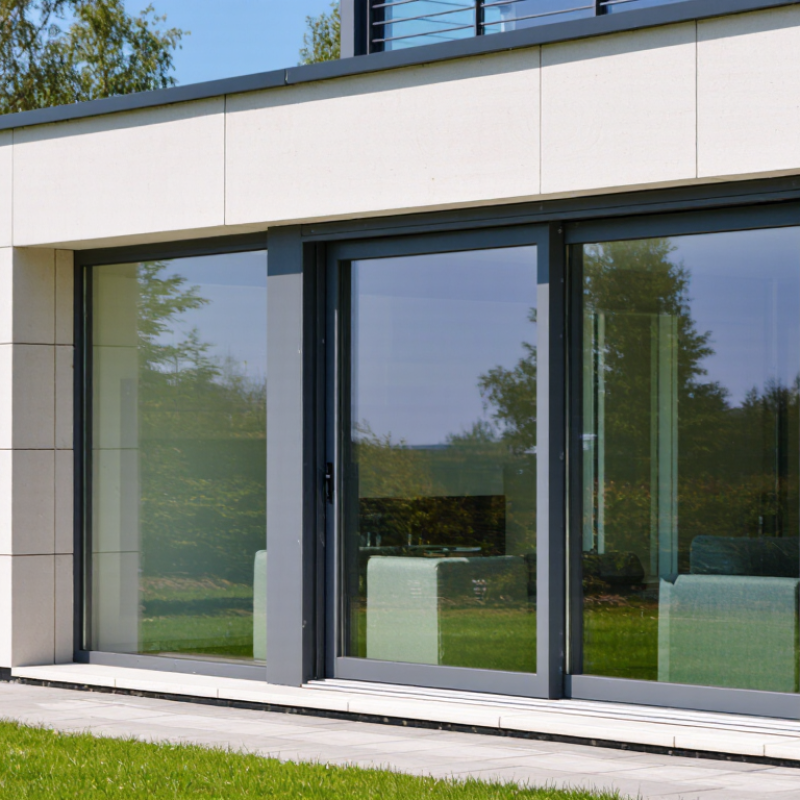
Sliding doors suit patios and balconies where a swinging door would take up valuable floor space. Their broad glass panels keep views open, though tracks need regular cleaning to prevent grit from affecting movement. For offices and larger public buildings, fixed glazing or curtain wall systems can bring daylight across deep floor areas. Pair fixed sections with operable windows where fresh air is required.

Thermal-break frames and suitable double glazing can improve comfort in both hot and cold climates. Yet frame quality alone cannot prevent drafts: careful installation and well-sealed junctions matter just as much. Coastal sites also need corrosion-resistant finishes and hardware, with maintenance planned around local conditions. There is no single best system for every project; a narrow bathroom window and a sun-facing living-room wall have different demands. Check opening clearances, glass safety requirements, and cleaning access before choosing.

How Do Thermal Breaks and Glazing Affect NFRC U-Factor and SHGC Ratings?

For aluminium windows and doors, thermal breaks and glazing shape two key NFRC ratings: U-factor and Solar Heat Gain Coefficient (SHGC). A thermal break separates the inside and outside aluminium frames, slowing heat transfer through the metal. Better interruption can help lower U-factor, which measures heat flow; lower is generally better for insulation. NFRC ratings describe the whole product, not just the centre of the glass. That detail matters. The U.S. Department of Energy estimates that windows account for 25–30% of residential heating and cooling energy use. Still, a rating alone cannot predict comfort in every room.

Glazing changes the balance. Multiple panes, low-emissivity coatings, and gas-filled spaces can reduce heat transfer. SHGC, rated from 0 to 1, indicates how much solar heat passes through the window. A lower value can limit summer heat gain, while a higher value may help admit useful winter sun. Orientation matters. So does local climate. A very low SHGC is not automatically best for every façade.

Tips: Compare NFRC-certified whole-product U-factor and SHGC values for the same size and configuration. Check frame, glass, and spacer details. Ask how the proposed ratings suit your climate and window orientation. Small differences on paper may feel different beside a cold aluminium frame, and installation quality can undermine good ratings. I would not choose on one number alone.

Which NAFS and AAMA Tests Measure Air, Water, and Structural Performance?

A high-performing aluminium window or door should be judged by test evidence, not frame appearance alone. NAFS, formally AAMA/WDMA/CSA 101/I.S.2/A440, evaluates air leakage, water penetration, and structural performance. Air testing measures leakage across the closed sash under pressure. Water testing applies spray and pressure to reveal leaks. Structural testing pushes and pulls the assembly to check deflection and damage.

The methods matter. ASTM E283 measures air leakage; ASTM E331 or E547 evaluates water penetration; ASTM E330 measures structural performance under uniform pressure. NAFS uses these methods within its performance ratings. For installed units, AAMA 502 describes field testing for air leakage and water penetration.

The U.S. Department of Energy’s Energy Saver guidance estimates that heat gain and loss through windows account for about 25–30% of residential heating and cooling energy use. That figure explains why performance matters, but it is not a NAFS rating.

Ask for the tested product configuration and its reported pressure levels. Check whether the report covers the same glass, opening style, and dimensions you plan to order. Small details count. A passing laboratory test cannot guarantee a perfect installation. Gaps in sealant, uneven shims, or a poorly adjusted lock can change real-world results. And site conditions vary.

How Should Frame Strength, Security, Hardware, and Installation Be Compared?

Choosing aluminium windows and doors in 2026 means comparing the complete unit, not just its visible frame. Ask for frame depth, wall thickness, corner-joint construction, and test results for the size you plan to buy. Wide openings deserve extra scrutiny: a narrow profile may look sturdy yet flex under wind pressure. Numbers matter.

Security depends on more than the lock. Check locking points, hinge reinforcement, cylinder protection, and whether glazing beads resist removal from outside. Ask which glass and frame configuration was tested; a strong lock cannot make weak glazing or poor anchoring secure. Hardware should operate smoothly without forcing, even when a door is slightly out of alignment. That small detail is easy to overlook.

Installation can change how well a good product performs. Confirm who measures the opening, how the frame will be anchored, and how gaps will be sealed against water and air. Ask for the installer’s process for checking level, drainage, and door clearance. A thick frame is not automatic proof of strength, and a low price may omit important fitting work. Specifications help, but the actual opening and exposure still matter.

How Does Aluminium Recycling Save 95% of Primary-Production Energy (IAI)?

For aluminium windows and doors, recycling matters before the frame reaches your home. The International Aluminium Institute reports that recycling aluminium can use about 5% of the energy required for primary production. That means energy savings of up to 95%. A striking difference.

Primary aluminium production starts with mined bauxite. The ore must be refined, then processed using energy-intensive electrolysis. Recycled aluminium follows a shorter route: scrap is sorted, cleaned, melted, and cast into new material. Picture old window frames arriving at a recycling facility, stripped of fittings and fed into a furnace. Remelting still requires heat, but it avoids much of the energy used to make metal from ore.

The 95% figure compares production energy, not every environmental impact. Collection, transport, coatings, and mixed materials complicate the picture. They matter. For a building project, ask how much recycled aluminium the frames contain and whether that information is verified. A high recycled content can reduce demand for primary metal, but it does not automatically make every product the best choice. Frame design, thermal performance, durability, and repairability deserve attention too. Recycling is a strong advantage, not a complete answer.

What Are the Best Aluminium Windows and Doors in 2026?

How aluminium recycling can save 95% of primary-production energy

The International Aluminium Institute reports that recycling aluminium requires about 5% of the energy needed to produce primary aluminium—equivalent to an energy saving of about 95%. For windows and doors, recycled content is one consideration alongside thermal performance, durability, and product quality.

Source: International Aluminium Institute (IAI). Energy use is indexed to primary aluminium production = 100.

FAQS

What does a window’s U-factor measure?

It measures heat flow through the complete window. Lower values generally indicate better insulation. Check the whole-product rating, not just the center glass.

How do thermal breaks affect aluminium frames?

A thermal break separates the frame’s inner and outer aluminium sections. This slows heat transfer through the metal. The frame can still feel cold.

What does SHGC tell me?

SHGC indicates how much solar heat passes through a window. Lower values can limit summer heat gain; higher values may admit useful winter sun. The best choice depends on climate and orientation.

How can glazing improve thermal performance?

Multiple panes, low-emissivity coatings, and gas-filled spaces can reduce heat transfer. Compare the proposed glass, spacer, and frame details together. One number is not enough.

Which tests check air, water, and structural performance?

Standardized tests measure air leakage, water penetration, and resistance to pressure. Ask for the tested configuration and pressure levels. Details matter.

Do laboratory test results guarantee good performance after installation?

No. Poor sealing, uneven shims, or a misadjusted lock can affect real-world results. Site conditions vary.

What should I check when comparing frame strength and security?

Ask about frame depth, wall thickness, corner joints, locking points, and hinge reinforcement. Check whether the tested unit matches your glass and opening size. A thick frame alone proves little.

How can I tell whether installation work is thorough?

Confirm who measures the opening and how the frame will be anchored and sealed. Ask how the installer checks level, drainage, and door clearance. I might still overlook a small gap.

Conclusion

Choosing the best Aluminium Windows & Doors in 2026 starts with matching the opening style and configuration to the building’s needs, such as ventilation, daylight, access, and weather exposure. Thermal-break frames can reduce heat transfer, while glazing choices influence both the NFRC U-factor, which indicates heat loss, and the solar heat gain coefficient (SHGC), which reflects how much solar energy enters. The right balance depends on the climate, orientation, and comfort goals of each space.

Performance should be compared through relevant NAFS and AAMA testing for air leakage, water penetration, and structural strength, alongside frame design, security features, hardware quality, and installation requirements. Even a well-rated product can underperform if it is poorly fitted, so careful detailing and professional installation matter. Aluminium also offers a sustainability advantage: according to the IAI, recycling aluminium uses about 95% less energy than producing primary aluminium, helping reduce resource use while supporting durable, long-lasting building components.

Liam

Liam

Liam is a dedicated marketing professional with a profound expertise in the industry, where he excels at highlighting the unique advantages of our core products. With a keen understanding of market trends and consumer needs, Liam frequently updates our company’s professional blog, providing......