How to Choose the Best Aluminum Bathroom Door

Time:2026-10-09 Author:Isabella
0%

Choosing the right Aluminum Bathroom Door is not merely a style decision. It affects privacy, ventilation, cleaning, safety, and long-term maintenance. A beautiful door can still fail when water reaches its lower frame daily.

Veteran fenestration consultant Daniel Mercer explains, “The best bathroom door controls moisture before it creates a maintenance problem.” This principle deserves attention. Aluminum resists rust, but hinges, seals, rollers, and fasteners still require careful selection. A weak finish may fade near steam. Poor drainage may leave small puddles beneath the door. Small details matter.

The ideal Aluminum Bathroom Door should match the room’s size, humidity, traffic, and cleaning routine. Measure the opening accurately. Check wall alignment. Confirm whether the door swings safely without striking a toilet, vanity, or towel rail. Tempered glass, when included, should come from a reputable supplier with clear product documentation. That evidence matters more than a polished showroom photograph.

Look for powder-coated or anodized aluminum profiles. Inspect corner joints closely. They should feel firm, not sharp or loose. Ask about replacement seals and hardware availability. A low purchase price may become expensive when parts are difficult to find.

There is no perfect door.

A homeowner may prefer a slim black frame, yet a lighter finish can hide water marks better. A sliding design saves space, but its track needs regular cleaning. This guide examines those trade-offs honestly, helping you choose a durable Aluminum Bathroom Door that suits real daily use, not just an attractive product image.
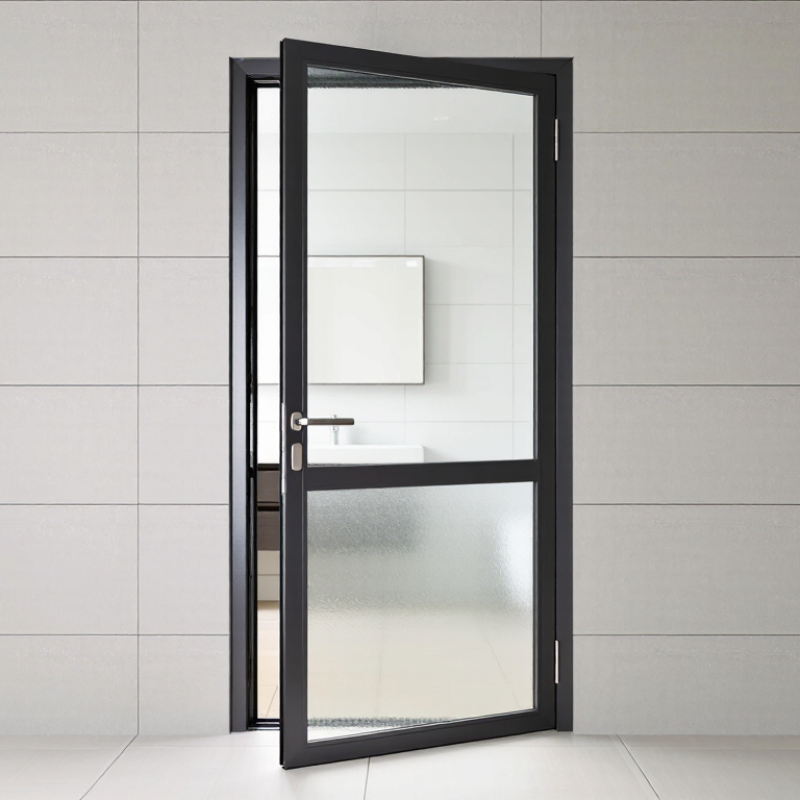
How to Choose the Best Aluminum Bathroom Door

Understanding Aluminum Bathroom Door Types and Applications

How to Choose the Best Aluminum Bathroom Door

Understanding Aluminum Bathroom Door Types and Applications

Aluminum bathroom doors come in several forms, and each suits a different bathroom layout. Hinged doors work well in larger rooms with clear floor space. Sliding doors help compact bathrooms feel less crowded. Bi-fold doors can solve awkward corners, although their hinges require careful adjustment. Framed models offer stronger support for larger glass panels, while semi-frameless designs create a lighter visual effect.

The bathroom’s moisture level should guide your material choices. Look for corrosion-resistant aluminum, sealed edges, and stainless-steel hardware. In a busy family bathroom, a framed sliding door may handle frequent use better than a delicate-looking design. For a wet room, check drainage slopes and splash control before choosing the door. I once underestimated the importance of handle clearance, and the door felt inconvenient every morning. Small measurements matter.

Tips: Measure the opening at several points, not just once. Confirm wall strength before installation. Choose textured glass for privacy, but inspect its cleaning needs. Ask about replacement seals and hardware availability. A low threshold looks elegant, yet it may allow more water to escape. That trade-off deserves honest consideration.

Assessing Bathroom Space, Layout, and Door Opening Requirements

Choosing an aluminum bathroom door starts with the room, not the frame. Measure the opening at the floor, middle, and top. Walls are rarely perfectly square. Record the ceiling height and nearby pipe locations. A few millimeters can affect installation.

I once measured only the widest point and ordered a door that rubbed against the lower wall. That mistake taught me to check the opening twice. Mark the sink, toilet, shower, and towel rail on a simple floor plan. Then test the door path with masking tape. It reveals awkward collisions quickly.

The opening direction matters as much as the door size. A hinged door needs clear floor space for its swing. It should not block the toilet or strike a person near the shower. An outward swing may improve emergency access, but it can narrow a hallway. A sliding aluminum door saves space, although its track needs a flat, stable wall. Check whether the wall can support the hardware before choosing this layout.

Allow room for seals, hinges, handles, and minor adjustment. Wet floors can become slippery, so avoid designs that create raised edges without a clear need. Aluminum resists moisture, but poor installation can still invite water behind the frame. Ask an experienced installer to inspect the wall condition and drainage slope. Measurements are useful. Real movement through the room matters more.

Comparing Materials, Finishes, Glass, and Hardware Options

Aluminum is light, moisture-resistant, and easy to maintain, making it practical for bathroom doors. Choose a frame with consistent wall thickness and clean, even joints. Thicker profiles usually feel more stable, but they can increase weight and cost. Check the coating carefully. Powder-coated surfaces resist daily splashes well when properly applied. Smooth satin finishes hide fingerprints better than glossy ones. I once selected a dark finish without checking the room’s lighting. It looked elegant in the showroom but felt heavy at home.

Glass changes both safety and atmosphere. Tempered glass is a sensible choice because it is processed for bathroom use and breaks into smaller pieces if damaged. Clear glass creates a wider visual space, while frosted or textured glass provides more privacy. If water spots bother you, heavily textured glass may require extra cleaning. Measure the opening twice. A few millimeters can affect alignment, sealing, and door movement.

Hardware deserves the same attention as the frame. Stainless steel hinges, handles, and screws generally handle humid conditions better than untreated metal. Select hinges that match the door’s weight and opening direction. Magnetic latches should close firmly without slamming. Soft seals reduce noise and limit water escape, though they may wear sooner than expected. Ask the installer about drainage, wall strength, and replacement parts. Good hardware cannot correct a poorly supported frame.

Checking Moisture Resistance, Safety, Durability, and Maintenance Needs

How to Choose the Best Aluminum Bathroom Door

Moisture resistance should be checked before appearance. The U.S. Environmental Protection Agency recommends indoor humidity between 30% and 50%. Bathrooms often exceed that range after hot showers. Choose anodized aluminum or a verified architectural coating, especially around hinges and the lower frame. Ask for coating performance documentation, such as FGIA/AAMA 2604 or 2605 testing. These standards assess coating durability, but they do not guarantee perfect installation.

Safety depends on small details. The World Health Organization reports about 684,000 fatal falls worldwide each year. A bathroom door should open smoothly without striking the toilet, basin, or a person needing help. Select corrosion-resistant hinges, a firm lever handle, and a low, visible threshold. If the door includes glass, use properly marked safety glazing and confirm local building requirements. Details matter.

Durability also depends on cleaning habits. Use a soft cloth and pH-neutral soap; harsh bleach can stain or weaken some finishes. Inspect screws, seals, and drainage paths every few months. Aluminum will not rust like ordinary steel, but it can pit near stagnant water or salt air. I have found that “low maintenance” is often overstated. Poor ventilation and trapped moisture still create problems. A better choice balances tested materials, safe movement, and realistic cleaning routines.

How to Choose the Best Aluminum Bathroom Door - Checking Moisture Resistance, Safety, Durability, and Maintenance Needs

Selection Factor What to Check Practical Benchmark Why It Matters Maintenance Guidance
Moisture Resistance Frame finish, drainage paths, door edges, and contact points between aluminum and other metals. Choose a corrosion-resistant aluminum frame with a continuous protective finish and no exposed untreated steel parts. Bathrooms produce frequent condensation and water splashes. Moisture can cause staining, corrosion of dissimilar metals, and deterioration of adjacent materials. Wipe standing water from the lower frame and inspect corners, joints, and fasteners periodically.
Surface Finish Whether the finish is uniform, firmly bonded, and suitable for humid interior environments. Look for an even powder-coated, anodized, or otherwise specified protective finish without peeling, bubbling, sharp edges, or bare spots. A sound finish helps protect aluminum from staining and limits damage caused by cleaning chemicals and humidity. Use a soft cloth and mild, non-abrasive cleaner. Avoid steel wool, abrasive powders, and strong acids or alkalis.
Water Sealing Bottom sweep, side seals, threshold design, and the fit between the door and frame. The door should close evenly, leave no obvious gaps, and direct water toward the bathroom side rather than the adjoining floor. Effective sealing reduces splash leakage, protects flooring, and helps prevent mold growth around the frame. Clean seals regularly and replace cracked, hardened, or permanently compressed gaskets.
Safety Glazing Glass type, visible safety marking, edge protection, and the condition of the glass panel. For doors using glass, select safety glass—typically tempered or laminated—specified for door applications and installed without edge damage. Ordinary annealed glass can break into large sharp pieces. Safety glass is designed to reduce injury risk when it breaks. Do not use a door with chips, cracks, deep scratches, or damaged glass edges. Follow local building requirements.
Hardware Safety Hinges, handles, locks, screws, finger clearance, and the direction of door swing. Hardware should be corrosion-resistant, securely fixed, smooth to operate, and free from sharp projections or pinch hazards. Reliable hardware prevents sudden door movement, loose components, and avoidable hand injuries in a wet environment. Check screws and hinges for looseness or corrosion. Lubricate only where the hardware manufacturer permits it.
Structural Durability Frame alignment, profile rigidity, corner joints, panel weight, and resistance to repeated opening and closing. The frame should remain square, the door should not sag, and the hinges should be rated for the installed door weight. Misalignment can increase water leakage, stress the glass or panels, and cause premature hardware failure. Inspect alignment after installation and adjust hinges or fasteners promptly if rubbing, sagging, or uneven gaps appear.
Ventilation Compatibility Clearance around the door, bathroom exhaust performance, and whether the design blocks required airflow. Confirm that the closed-door arrangement still supports the room’s required ventilation and does not obstruct an exhaust fan or air path. Good ventilation reduces condensation, odor, and the likelihood of mold on nearby surfaces. Keep exhaust grilles clean and operate the fan during bathing and for a suitable period afterward.
Cleaning Requirements Accessibility of tracks, drainage holes, seals, corners, and hardware surfaces. Prefer a design with smooth surfaces, minimal dirt traps, accessible channels, and removable or cleanable seals. Hard-to-reach areas retain soap residue and moisture, which can create odors, stains, and microbial growth. Rinse away residue, dry the frame, and clean tracks or drainage channels at least monthly or more often in heavy-use bathrooms.
Chemical Compatibility Resistance of the aluminum finish, sealants, gaskets, and hardware to bathroom cleaning products. Use products specifically described as suitable for coated or anodized aluminum and test any unfamiliar cleaner in a hidden area first. Bleach concentrates, acidic descalers, and abrasive cleaners can discolor finishes or damage seals if misused. Never mix cleaning chemicals. Rinse treated surfaces with clean water and dry them after cleaning.
Installation Quality Wall anchoring, waterproof sealant, frame plumb, door clearance, and compatibility with the wall structure. The frame should be level, plumb, firmly anchored, and sealed at appropriate perimeter joints without blocking drainage paths. Even a high-quality door can leak, bind, or corrode prematurely when installed out of square or sealed incorrectly. Inspect perimeter sealant annually for gaps, peeling, or mildew and renew it when necessary using a bathroom-suitable sealant.
Expected Service Life Quality of the frame, hardware, seals, finish, and availability of replacement wear parts. Choose a door with replaceable seals and standard serviceable hardware; assess the complete system rather than the aluminum frame alone. Seals, rollers, hinges, and latches generally wear sooner than the aluminum frame and may determine the practical service life. Replace worn seals or hardware instead of forcing a misaligned door, and keep installation and care records when available.
Quick decision rule: Prioritize a properly finished aluminum frame, safety glazing where applicable, corrosion-resistant hardware, effective water sealing, and professional installation. These factors usually have a greater effect on bathroom performance than appearance alone.

Evaluating Installation Methods, Costs, and Long-Term Value

Choosing an aluminum bathroom door involves more than comparing finishes.

In renovation projects, I have seen installation quality affect daily comfort more than the door’s price. Measure the opening twice, including wall thickness, floor slope, and available swing space. A hinged door needs strong anchors and a clear radius. A sliding model saves space, but its lower track can collect hair and soap. It sounds minor. It is not.

For a straightforward opening, a professional can often install a hinged aluminum door in several hours. Sliding systems may take longer because tracks must remain level. Ask whether the quote includes delivery, removal, waterproof sealing, hardware, and later adjustments. Labor rates vary by region, yet missing items create the real surprise. A low-cost frame may also use thinner profiles or weaker rollers. I once accepted a cheaper estimate and regretted the noisy track after six months. The lesson is useful, though not universal.

Long-term value depends on corrosion resistance, drainage, and repair access. Look for powder-coated or anodized surfaces, stainless fasteners, replaceable seals, and smooth drainage paths. In humid bathrooms, wipe standing water from the bottom rail and inspect seals every few months. Request written material specifications and a workmanship warranty. Reliable installers explain tolerances instead of promising a perfect fit. I still think appearance matters, but a beautiful door that leaks is an expensive decoration.

FAQS

Which aluminum bathroom door suits a small bathroom?

A sliding door usually saves floor space and reduces collisions. Its track needs a flat, stable wall. Check wall strength before installation.

When is a hinged aluminum bathroom door a better choice?

Hinged doors suit rooms with clear floor space. Keep the swing away from the toilet, shower, and nearby people. Measure the path carefully.

Can a bi-fold door solve an awkward bathroom layout?

Yes, bi-fold doors can work around tight corners. Their hinges need regular adjustment. Small alignment problems can make movement feel rough.

What measurements should be taken before ordering?

Measure the opening at the floor, middle, and top. Record ceiling height and nearby pipes. Walls are rarely perfectly square.

How can I test the door opening direction?

Mark the door path with masking tape. Include the sink, toilet, shower, and towel rail. This simple outline reveals collisions quickly.

What aluminum frame features matter in a humid bathroom?

Choose corrosion-resistant aluminum, sealed edges, and even joints. Thicker profiles may feel stronger, but they can cost more and weigh more.

Which glass provides privacy and practical cleaning?

Frosted or textured glass offers more privacy. Heavily textured surfaces can collect water spots. Clear glass feels spacious but reveals more of the room.

What hardware should an aluminum bathroom door use?

Stainless-steel hinges, handles, and screws generally suit humid conditions. Match the hinges to the door weight. A firm latch should close without slamming.

Is a low threshold always the best choice?

Not always. It looks clean, but more water may escape onto the floor. Check drainage slopes and splash control before choosing it.

What installation mistake should homeowners avoid?

Do not measure only the widest point. I once did that, and the door rubbed against the lower wall. Check measurements twice, then inspect wall support.

Conclusion

Choosing the best Aluminum Bathroom Door begins with understanding the available door types and how each suits your bathroom’s layout and daily use. Consider the available space, door swing, opening direction, and whether a sliding, hinged, folding, or compact design would improve movement and accessibility. The door’s size and installation position should also support privacy while allowing convenient entry and exit.

Next, compare aluminum finishes, glass styles, hardware, and overall construction quality. A suitable Aluminum Bathroom Door should resist moisture, corrosion, and frequent cleaning while providing reliable safety and long-term durability. Frosted or textured glass can improve privacy, while strong hinges, handles, seals, and secure frames enhance performance. Finally, evaluate installation requirements, labor, maintenance, and total cost rather than focusing only on the initial price. A well-selected door should offer practical operation, easy upkeep, lasting value, and a clean appearance that complements the bathroom environment.

Isabella

Isabella

Isabella is a dedicated marketing professional with a sharp focus on driving brand growth and engagement through strategic content creation. With an extensive background in digital marketing, she combines her passion for storytelling with her keen understanding of industry trends to deliver......